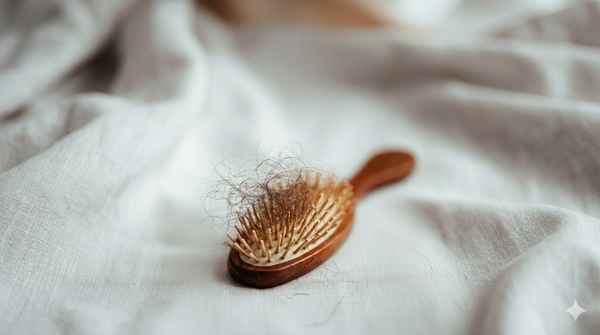
Finding more hair than usual on your pillow, shower floor or hairbrush can be unsettling. And if you have been searching, how can I stop my hair fall, you have probably already come across everything from onion juice to expensive scalp serums.
But hair fall is not always a scalp problem.
Your hair follicles respond to what is happening inside your body too. Stress, rapid weight loss, restrictive diets, iron deficiency, illness, hormonal changes, pregnancy, postpartum recovery and genetics can all affect the hair growth cycle. Excessive shedding can also appear a few months after a trigger such as illness, childbirth, major stress or significant weight loss.
Research from India has also found nutritional deficiencies to be common among people experiencing hair loss, making nutrition worth looking at alongside other possible causes. [NIH]
So, if you are wondering how to stop your hair from falling, start from the inside out.
1. Make protein a daily priority
Your hair is largely made of keratin, a protein. Consistently eating too little protein or too few calories can interfere with normal hair growth and contribute to increased shedding.
Instead of obsessing over a single "hair food", make protein part of every major meal.
Think eggs, fish, chicken, Greek yoghurt, paneer, soy, dal, beans, lentils, nuts and seeds.
If you have recently started a restrictive diet or are losing weight rapidly, this becomes even more important. Significant weight loss is a recognised trigger for excessive hair shedding.
2. Check your iron before reaching for an iron supplement
Iron deficiency is one of the nutritional factors associated with hair loss, particularly among women.
An Indian study of people experiencing hair loss found varied micronutrient deficiencies across different types of alopecia, with iron deficiency particularly relevant in telogen effluvium. [NIH]
That does not mean every case of hair fall is caused by low iron. It means iron status is worth checking when shedding is persistent, especially if you have heavy periods or follow a vegetarian or restrictive diet.
Add iron-rich foods such as lentils, beans, leafy greens, eggs, meat and seafood. Pair plant-based iron sources with vitamin C-rich foods to improve iron absorption.
And don't start high-dose iron blindly. If your levels are already adequate, supplementation is unnecessary and excessive iron can be harmful.
3. Don't ignore vitamin D, B12 and zinc
Hair follicles are metabolically active structures, which is why nutritional gaps can sometimes show up as changes in the hair cycle.
Research has linked nutritional factors including vitamin D, iron, zinc and vitamin B12 with different forms of hair loss. [NIH]
In an Indian study of people with hair loss, deficiencies in several amino acids and micronutrients were identified across different types of alopecia. [NIH]
The takeaway is not to take every vitamin available. It is to make sure your diet is covering the basics and get relevant deficiencies checked when hair fall persists.
4. Biotin matters, but more isn't always better
Biotin is probably the first nutrient that comes to mind when you think about hair fall control.
And yes, severe biotin deficiency can cause thinning hair. But biotin deficiency is rare, and there is limited scientific evidence that biotin supplements improve hair health in people who are not deficient. [NIH]
You can get biotin naturally from foods such as eggs, salmon, nuts, seeds and milk.
If testing identifies a deficiency, targeted supplementation may be useful. Just remember that more is not automatically better. High-dose biotin can also interfere with certain laboratory tests. [NIH]

5. Don't underestimate stress and sleep
Sometimes your hair fall starts after the stressful period, which makes the connection easy to miss.
Major psychological stress, high fever, illness, surgery, childbirth and significant weight loss can push more hairs into the shedding phase. Increased shedding may become noticeable a few months after the trigger. [AAD]
That makes sleep, regular meals and recovery more relevant to how can I stop my hair from falling out than another overnight hair mask.
You don't need a perfect wellness routine. Aim for consistent sleep, adequate food intake, regular movement and some form of stress management that you can actually maintain.
6. Protect the hair you already have
Not every strand falling from your head represents a problem with the follicle. Some of what you see may be breakage.
Repeated heat styling, bleaching, chemical treatments and hairstyles that constantly pull at the roots can damage the hair or contribute to hair loss.
So, if you're wondering how I can stop my hair fall at home, start with the basics:
-
Loosen chronically tight ponytails and buns
-
Reduce excessive heat styling
-
Detangle gently
-
Avoid repeatedly processing already damaged hair
-
Don't aggressively brush or pull through knots
Oiling may make the hair feel softer, but it should not be treated as a solution for nutritional, hormonal or genetic hair loss.
7. Consider supplements as nutritional support, not a shortcut
When your diet has gaps, supplements can make nutritional support easier.
A multivitamin may help cover nutritional gaps, while targeted nutrients such as iron, zinc or vitamin D make more sense when there is a demonstrated need. Nutritional assessment is commonly included when evaluating persistent hair shedding. [NIH]
Collagen powder is another popular option. Collagen provides amino acids and may support hair quality, while human research on nutritional formulations containing hydrolysed collagen, vitamins and minerals has shown improvements in hair-growth parameters in people with telogen effluvium. [NIH]
Wellbeing Nutrition's Beauty Collagen and hair-focused nutritional supplements can fit into this approach when you want convenient nutritional support without treating supplements as a replacement for a balanced diet.
So, how can I stop my hair fall immediately?
Unfortunately, hair does not work on an overnight timeline.
If your shedding was triggered by stress, illness, childbirth or rapid weight loss, it can take time for the hair cycle to normalise even after the trigger has been addressed. [AAD]
Postpartum shedding, for example, is common and usually temporary as falling oestrogen levels shift the hair cycle after childbirth. [AAD]
If you're experiencing sudden or persistent shedding, widening of your parting, bald patches, scalp irritation or noticeable thinning, don't keep experimenting with home remedies. Different types of hair loss have different causes and treatments, so identifying the cause matters. [AAD]
The better question isn't just how do I stop my hair fall?
It's why is my hair falling more than usual in the first place?
Once you answer that, the solution becomes much clearer.
Key Takeaways
-
Hair fall can start from within. Protein, iron, vitamin D, B12 and zinc all deserve attention.
-
Don't supplement blindly. Correcting an actual nutritional gap is more useful than taking everything marketed for hair growth.
-
Stress, illness, childbirth and rapid weight loss can trigger shedding.
-
Protect your existing hair by reducing heat, chemical damage and tight hairstyles.
-
Healthy hair takes time. Persistent or sudden hair loss deserves professional evaluation.
FAQs
1. How can I stop my hair fall naturally?
Start with adequate protein, iron-rich foods, fruits and vegetables, healthy fats, sufficient calories, good sleep and stress management. Also identify nutritional deficiencies instead of relying only on home remedies.
2. How to stop my hair from falling?
Look at the possible trigger first. Nutrition, stress, hormonal changes, illness, genetics and hair-care practices can all contribute to hair fall.
3. How can I stop my hair fall at home?
Improve your diet, avoid restrictive eating, protect your hair from excessive heat and tight hairstyles, and maintain consistent sleep. Persistent hair loss should be assessed by a dermatologist.
4. How can I stop my hair fall immediately?
There is no reliable way to stop excessive hair shedding overnight. Hair follows a growth cycle, so improvement depends on addressing the underlying cause.
5. Can biotin stop hair fall?
Biotin can help when a person is deficient, but routine high-dose supplementation is not proven to stop hair loss in people with adequate biotin levels. NIH Office of Dietary Supplements
6. Can collagen powder help with hair?
Collagen provides amino acids that support protein intake, and some human research suggests collagen-containing nutritional formulations may support hair-growth parameters.
7. Should I take a multivitamin for hair fall?
A multivitamin may help cover nutritional gaps, but it is not a universal treatment for hair loss. Targeted supplementation is more appropriate when a nutritional deficiency is identified.
8. Can stress cause hair fall?
Yes. Significant physical or psychological stress can trigger excessive shedding, often becoming noticeable a few months after the stressful event.
9. Is postpartum hair fall normal?
Yes. Increased shedding after childbirth is common and usually temporary as the hair cycle returns to its usual pattern.
10. When should I see a dermatologist for hair fall?
See a dermatologist if your hair fall is sudden, persistent, patchy or accompanied by visible thinning or scalp changes. Finding the underlying cause is the first step towards effective treatment.

Recommended Products
 Beauty Collagen Strawberry Watermelon Flavour
₹1,799 – ₹7,196
Beauty Collagen Strawberry Watermelon Flavour
₹1,799 – ₹7,196
 Beauty Korean Marine Collagen Peptides Mango Peach Flavour
₹1,799 – ₹7,196
Beauty Korean Marine Collagen Peptides Mango Peach Flavour
₹1,799 – ₹7,196
 Pure Korean Marine Collagen Peptides | Unflavored | Combat Signs of Ageing
₹1,619 – ₹6,476
Pure Korean Marine Collagen Peptides | Unflavored | Combat Signs of Ageing
₹1,619 – ₹6,476
 Hair Fall Control
₹649 – ₹1,298
Hair Fall Control
₹649 – ₹1,298
 Healthy Hair
₹599 – ₹1,138
Healthy Hair
₹599 – ₹1,138
 Multi + Omega 50+ Slow
₹1,259 – ₹2,518
Multi + Omega 50+ Slow
₹1,259 – ₹2,518
 Multi + Omega for Her Slow
₹1,259 – ₹2,518
Multi + Omega for Her Slow
₹1,259 – ₹2,518
 Multi + Omega for Him Slow
₹1,259 – ₹2,518
Multi + Omega for Him Slow
₹1,259 – ₹2,518